Out of Office: Making something no one asked for
Last year, we started making a semi-quarterly zine called Out of Office. Like the name suggests, it exists outside of client work and isn’t tied to a deliverable, a campaign, or a specific outcome.
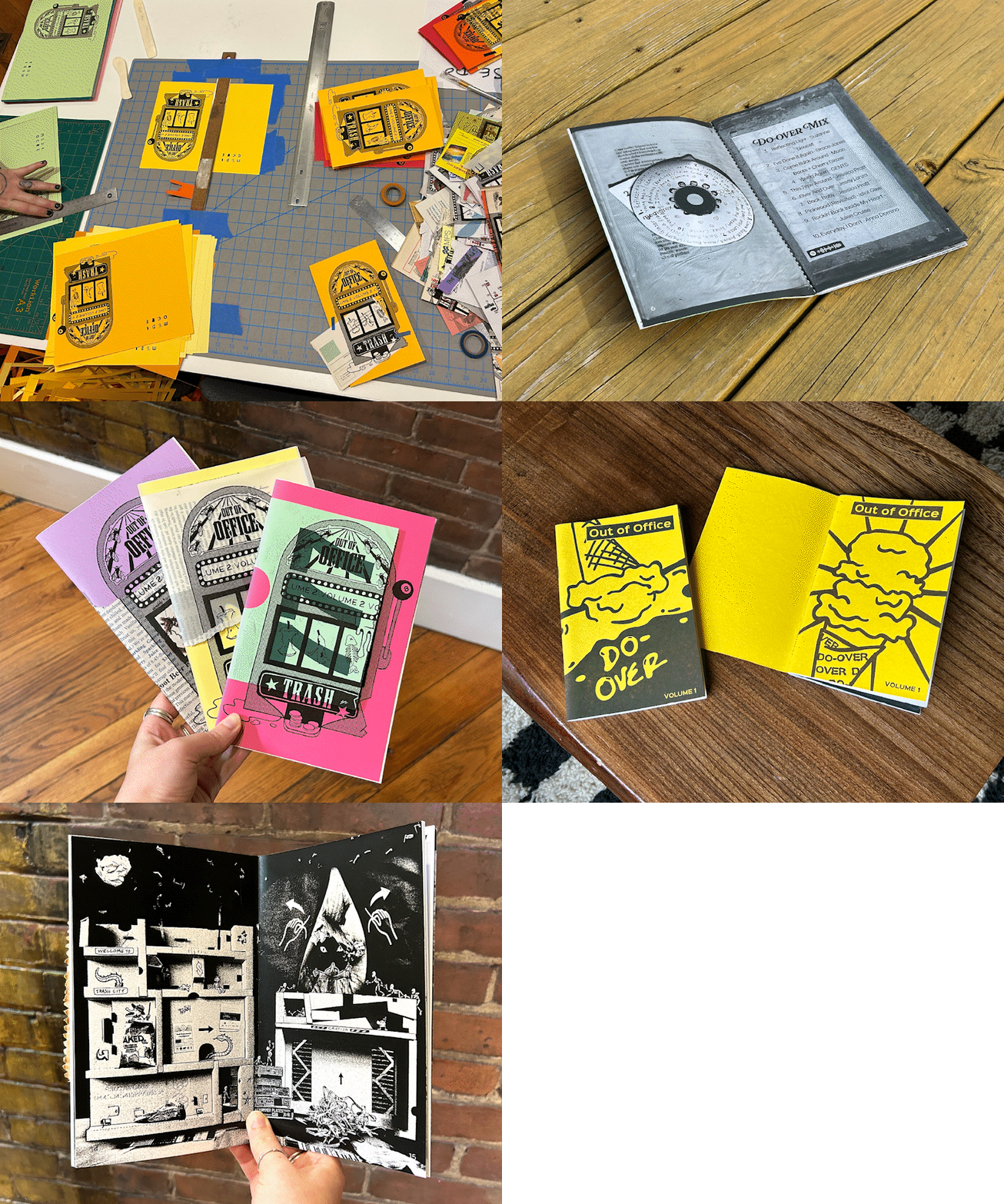
Everyone on our team (developers, copywriters, project managers, designers, etc.) contributes one spread to the zine. Each person is responsible for the concept, content, and design of their page, regardless of their role. We’ve finished two volumes so far, with a third currently in progress.
It might seem like a side project, but it’s become something more: a deliberate space to experiment, take risks, and to make visible the values that shape how we work. We protect on-the-clock time for team members to focus on their spreads and we’ve learned more with every issue we’ve produced. The zine is as much about discovery as it is about the final object.
Room to try things
The zine gives us a dedicated space for creative play without a brief. Without external expectations shaping the work, we can try things we might not otherwise make time for. This freedom allows us to try out ideas, formats, mediums, and techniques that don’t always fit inside client constraints. The focus is on exploration, not polish or performance.
Some spreads are carefully structured, others embrace imperfection. What unites them is attention: attention to concept, to layout, to storytelling, to material. Working in print slows things down and invites closer consideration. You notice details differently when you’re designing something that’ll be held, flipped through, and lived with; not just scrolled past.
For us, having this kind of sandbox is essential. It keeps our creative thinking flexible and helps us approach client work with more curiosity and fewer assumptions.
Limits we actually like
Although the zine is open-ended, it’s built around a clear set of constraints: one 8 by 10 inch spread per person, a defined timeline, and a shared theme.
Each issue starts with a handful of theme suggestions and a group vote. Volume 1 centered on the idea of a do-over. Volume 2 focused on trash. The themes are intentionally broad, giving everyone a common starting point without dictating what the work should become.
Those boundaries do more than organize the process; they actively create opportunity. Knowing the format and the theme allows us to focus our energy on trying new things instead of managing decision fatigue. By limiting certain variables, we open space for surprises. Over time, we’ve learned how to push these constraints without feeling trapped, finding unexpected connections between ideas, materials, and approaches in each issue.
Protecting dedicated time to make our spreads has been crucial. It signals that this work matters and that creative play deserves space. In turn, it reinforces the culture of care and curiosity we try to sustain as a team.
What we get out of it
Making the zine reinforces the values we want to carry into client work: curiosity, consideration, and experimentation. It strengthens collaboration, encourages risk-taking, and reminds us that good work often comes from attention to process, not just efficiency.
Every issue teaches us something new. We notice which approaches work and which risks are worth taking again, and how different ideas take shape when they’re given room to breathe. That learning feeds back into our regular client work, influencing how we ideate, test, and iterate.
The zine is also a reflection of the culture we want to protect. The focus on materiality is part of that, too. Even in a digital-first world, details matter. Thoughtfulness in execution, effort in presentation, and attention to context are qualities that carry from Out of Office into everything we design and build. The zine is a small but tangible reminder of how we want to show up.
Some of that shows up best in the team’s own words:
“I love having the chance to express myself creatively, in my own personal way, that still collaborates with everyone else on the team. I feel like I learn a lot about everyone from their exploration of the issue's theme and it's a lot of fun.”
“The zine’s been a fun way for me as a non-designer to take part in making something physical and visual together, rather than working behind the scenes. It’s also been fun to bang around ideas for themes, and to see them come together into a cohesive whole but with everyone’s take being uniquely their own. You know, zine stuff.”
“The zine has been a great way to stretch some different creative muscles than usual and a fun way to connect with the team over our shared interests and unique points of view.”
An open invitation
Out of Office is something we make for ourselves, but the practice behind it isn’t exclusive.
It’s a reminder that exploration and care don’t need external permission. Read it, flip through it, or let it inspire you to make something of your own, however small or unfinished. Maybe it nudges you to protect a little time for experimentation in your work — or simply notice what happens when constraints and curiosity collide.
Out of Office is available at mediocre-mart.bigcartel.com. We’ll be donating profits from each issue to local organizations. Volume 1 (do-over) supports LEX Center for Creative Reuse, and volume 2 (trash) supports Kentucky Heartwood.